 Breaking News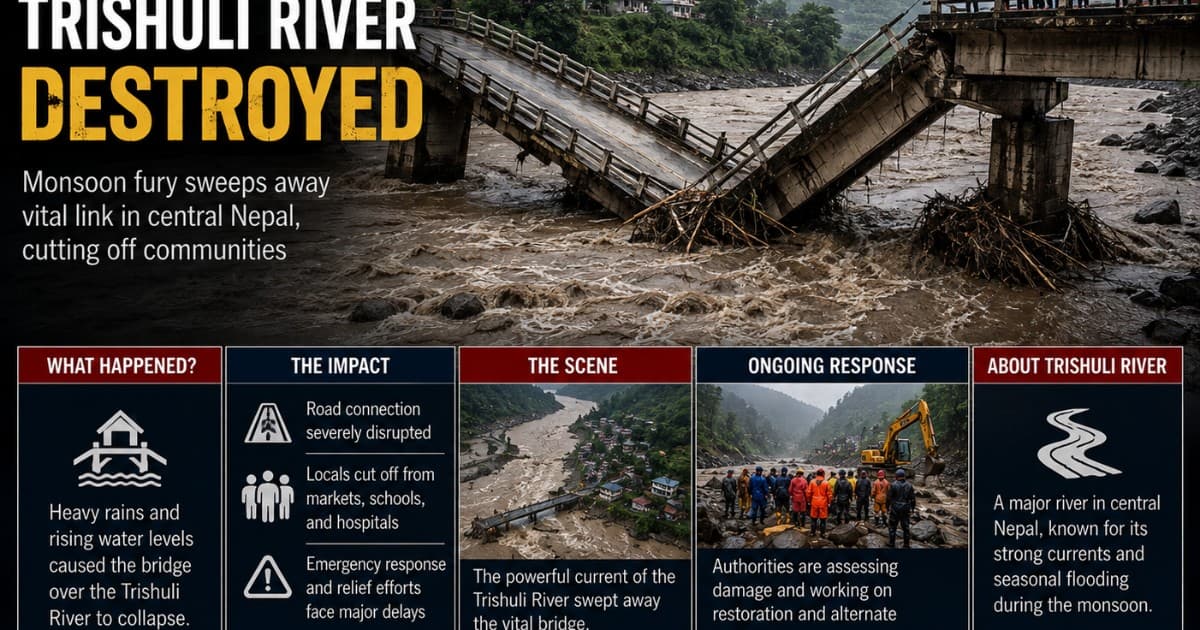
Breaking News
Nepal's Trishuli River Claims Another Bridge as Monsoon Fury Reshapes the Landscape
By The Daily Ledger2 min read7 views
A bridge over Nepal's Trishuli River has been lost to the river's powerful currents, leaving nearby communities cut off and exposing the fragility of the…
Where a Bridge Once Stood, Nepal's Trishuli Now Tells a Different Story
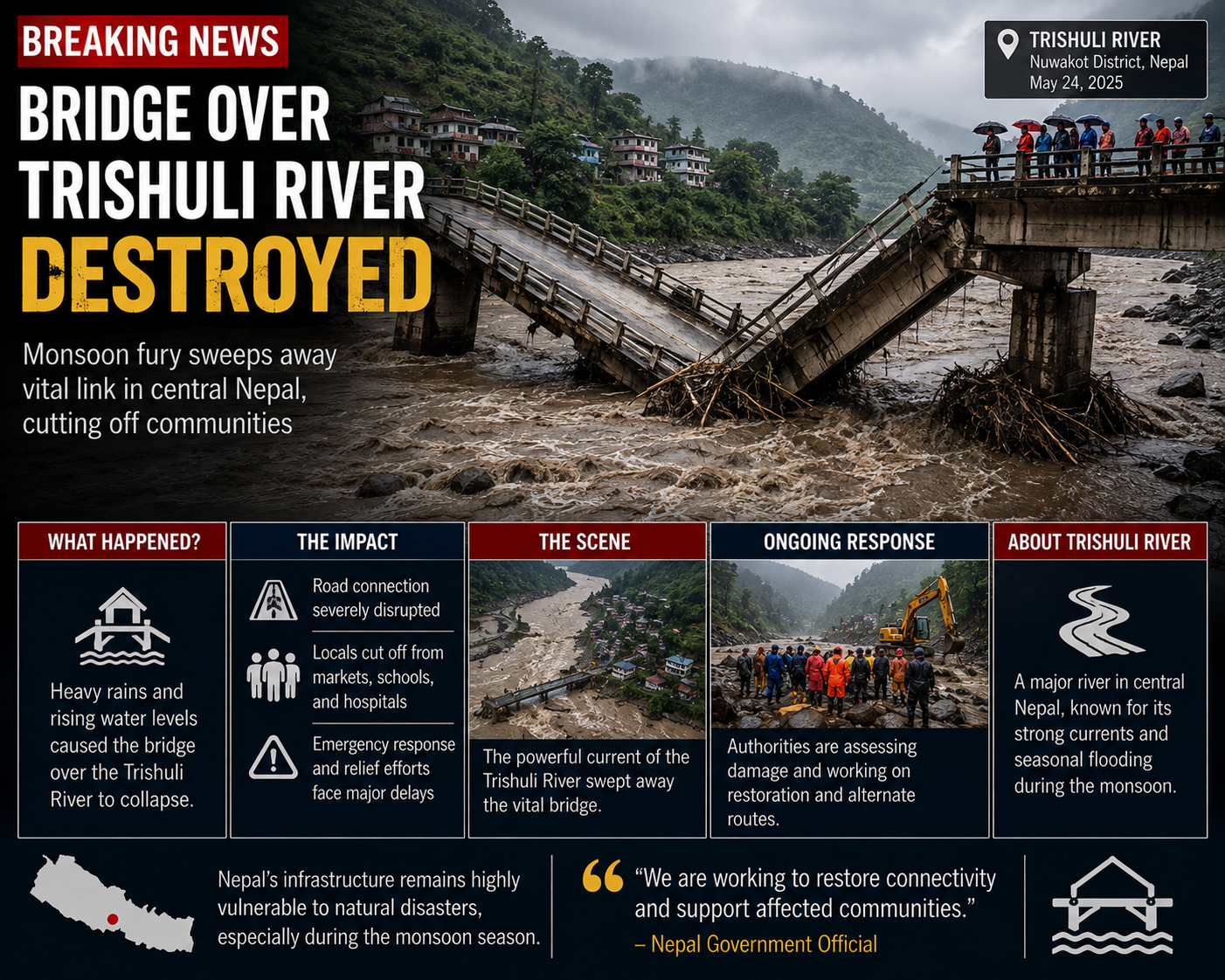
The Trishuli River does not keep what it takes. Where a bridge once connected communities on either bank, the river now runs uninterrupted, its brown waters carrying no memory of the structure that once gave thousands of people a way across.
The loss of the crossing is the latest in a recurring cycle of destruction that Nepal's river valleys endure each monsoon season. The Trishuli, which carves through steep gorges in central Nepal before joining the larger river systems of the Terai lowlands, swells dramatically between June and September as monsoon rains pour off the Himalayas. In high-flow conditions, the river becomes a force capable of dismantling concrete and steel within hours.
For the villages on either side of where the bridge stood, the consequences are immediate and practical. Farmers cannot reach markets. Students face long, hazardous detours to reach schools. Residents requiring medical attention must now navigate routes that can add hours to a journey that once took minutes. In the mountain communities of Nepal, a single river crossing is often not one option among many — it is the only option.
Nepal's road and bridge network has long been stretched thin by the demands of a rugged landscape and the punishment of annual monsoon seasons. Each year, the Department of Roads records losses of bridges and road sections across the country's river valleys, and each year, communities wait — sometimes for months — for temporary structures or permanent replacements to arrive. The Trishuli corridor, which also serves as a major route linking Kathmandu to districts in the country's mid-hills, has seen repeated damage to transport infrastructure over the decades.
The destruction of a bridge is rarely a single event in isolation. Floods in Nepal typically arrive alongside landslides, which block access routes from above while rivers destroy them from below, compounding the difficulty of delivering emergency materials and equipment to affected areas.
Local authorities and disaster management teams generally move to assess such damage in the days after waters recede, but the timeline for restoring a permanent crossing can stretch far beyond what affected communities can easily absorb. Temporary wire suspension bridges or wooden footbridges sometimes serve as stopgaps, though these carry limited loads and offer little comfort to traders or those needing vehicle access.
The Trishuli's latest act of erasure is a reminder of how exposed Nepal's infrastructure remains to a landscape that is both breathtaking and unforgiving. The river has always run this way. The question facing engineers, planners, and policymakers is how to build crossings that can survive it — and how to do so before the next monsoon season rewrites the map again.

Comments (0)
No comments yet. Be the first to share your thoughts.
Leave a comment
Comments are reviewed before they appear.